
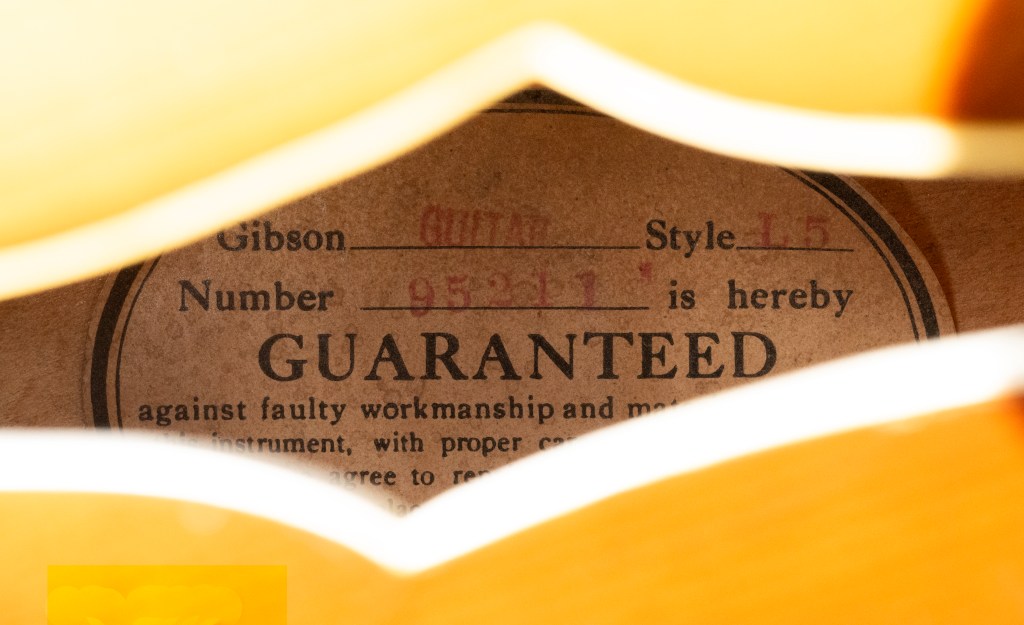
Serial number: 95211
Year shipped: 1938
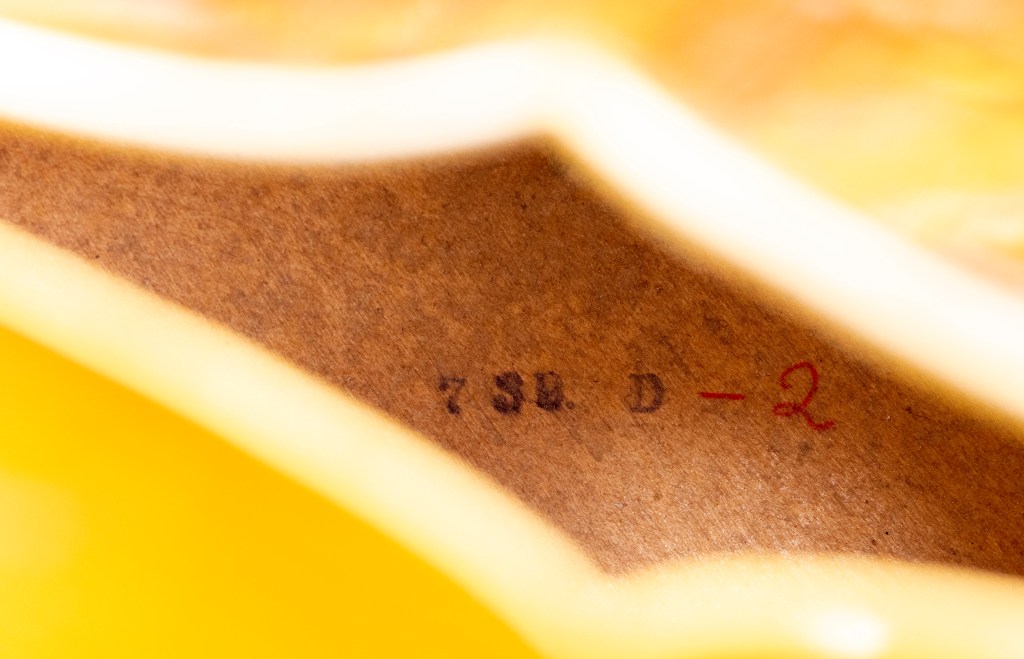
FON: 739D-2 (the ‘2’ written in red ink)
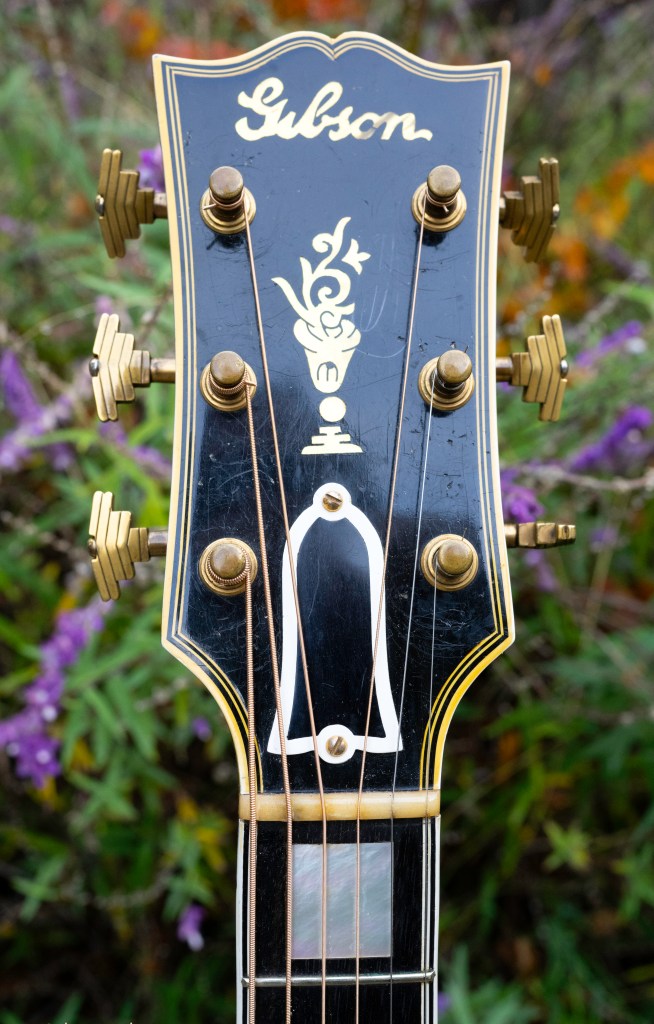
Headstock: Horizontal ‘Gibson’ script logo (no dot over the letter ‘i’)
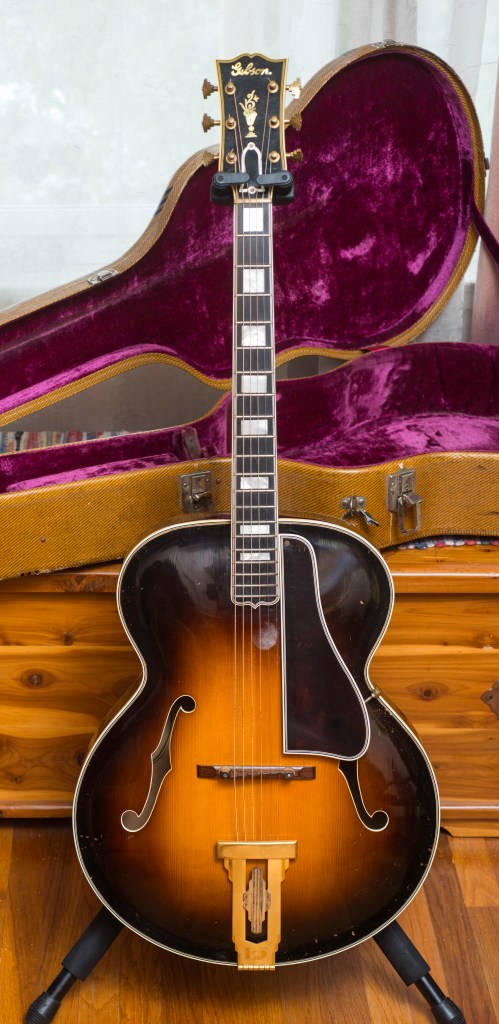
Neck/fingerboard: 20 fret fingerboard with pointed end and narrow block inlays from the first fret. Wide neck heel
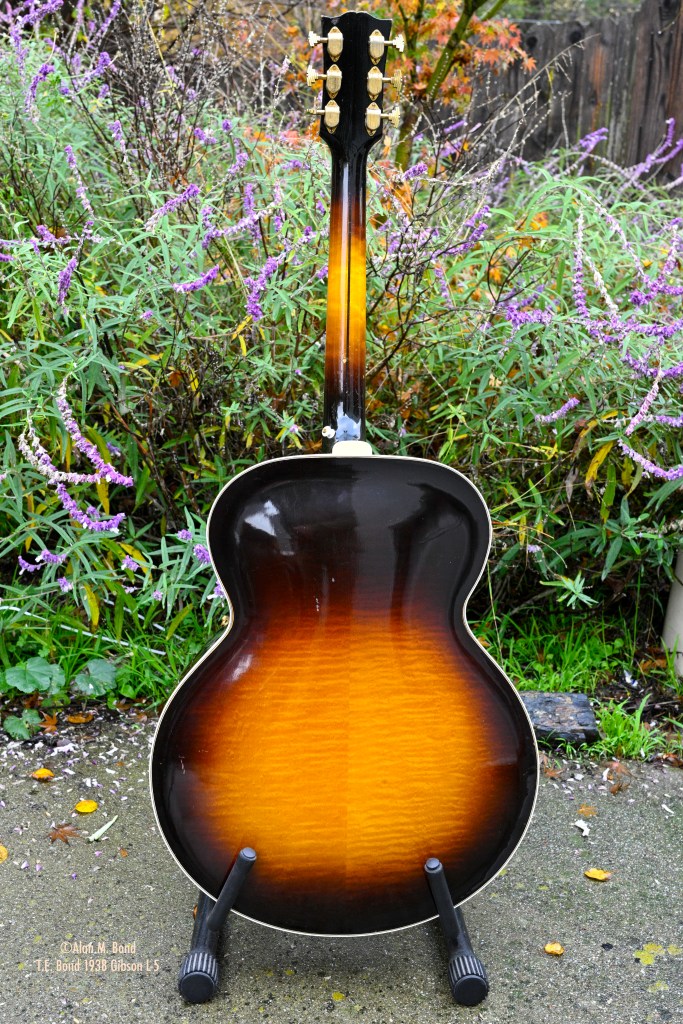
Body: 17-inch body with maple back and sides and large bound f-holes
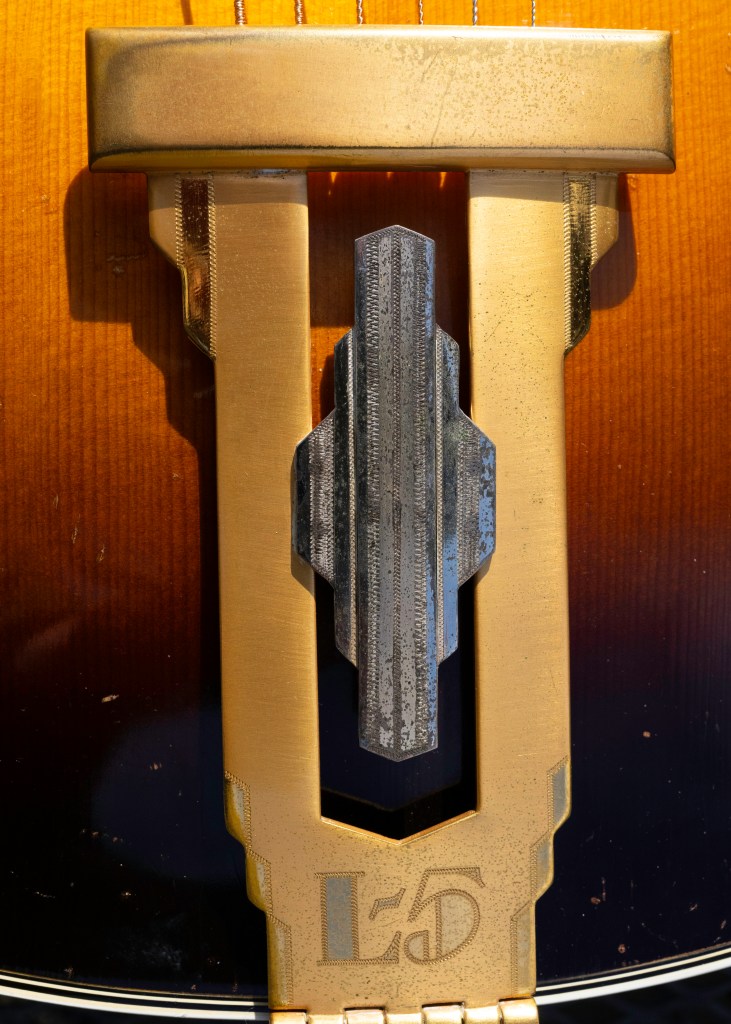
Hardware: Gold-plated metal parts including hinged tailpiece with silver centre insert and three engraved diamonds and Grover Imperial tuners. Rosewood bridge
Notes: This instrument is recorded in the Gibson shipping ledgers as an “L-5 long scale”. It was originally shipped on 5 April 1938 to Sherman Clay & Company along with three other L-5 models which are also described in the ledger as being “long scale” (the longer 25-½ inch scale length became a regular feature of the 17-inch L-5 in 1938). It was subsequently returned to the factory for repairs and shipped again on 6 Apr 1939 to “H. Potter” and was described as an L-10 model at that time (reason unknown).
The guitar’s current owner, Alan Bond, shares the story of this L-5:
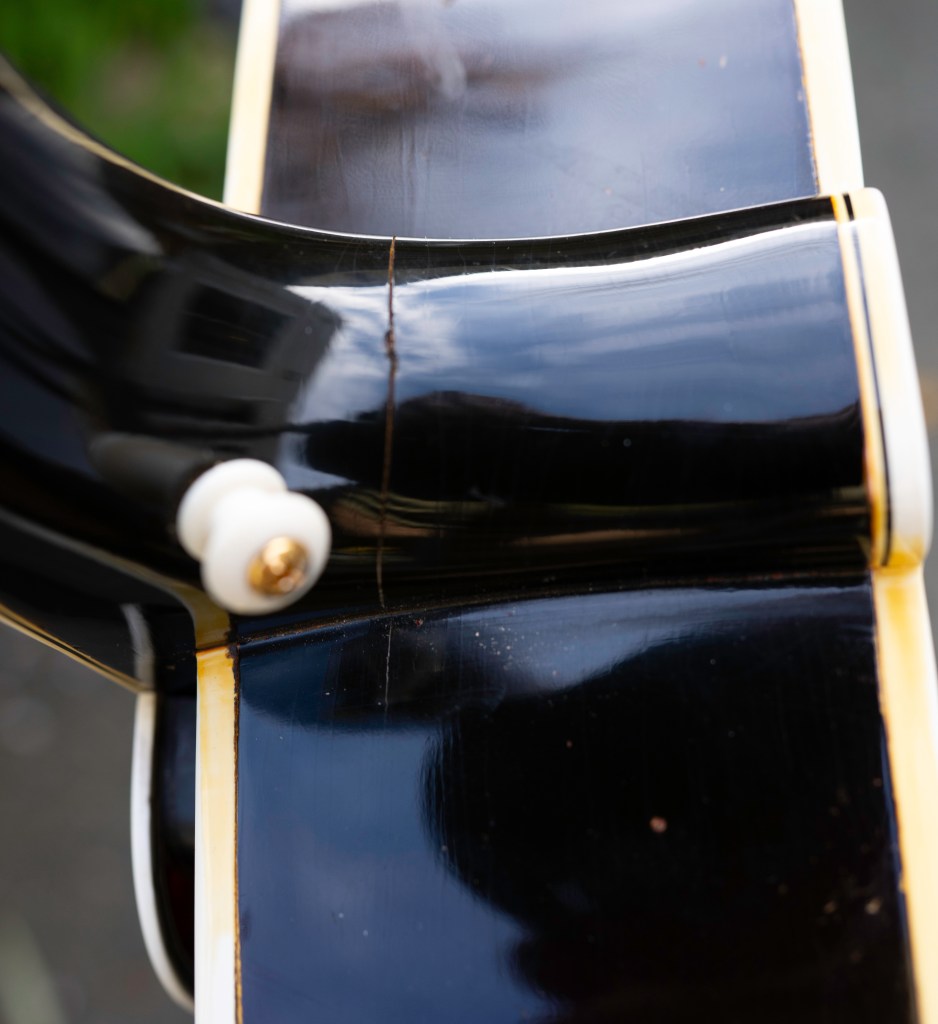
“The Gibson L-5 pictured here belonged to my father, Ted. He bought the guitar in 1939 at Sherman and Clay Music store in San Francisco. Before the War he was studying to be an arranger. The Big Band era was coming to an end, so he worked on arrangements for smaller bands. He told me that when he left to fight in Italy with the U.S. Army, he tuned up the L-5 and stored it in a closet at his mother’s house. When he returned more than three years later, the guitar was still in tune! After the War, my father played the guitar in various jazz combos. Gibson did a partial re-fret, leaving the original frets above the twelfth fret. In the 1980s, the guitar suffered some treble side sinking due to the humid weather in South Carolina. There is also a crack along the neck heel.
The guitar sounds amazing and has a nice, low action. I use light bronze strings for a good acoustic sound but my father always used flat wound strings and a De Armond pick-up played through his 1952 Fender Tweed Deluxe amplifier.”


Images courtesy of Alan Bond